My UPD8
You need to login before you download the free activities. You can register here.
- The Centre for Science Education
- The Association for Science Education
- Partners
- Part of ASE online
Three Parents


Type: Activity
Learning Strategy: Imaginative inquiry
Topic: DNA
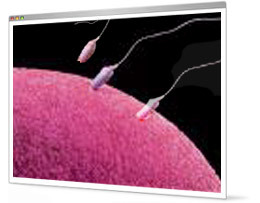
Newcastle scientists recently created a human embryo with three separate parents. The scientists believe the development is a potential breakthrough in the prevention of serious disease. In this activity, students take on the role of Darcy, a trainee nurse on placement with the Centre for Reproductive Medicine. As Darcy, they explain the possible new treatment to a couple of worried would-be parents.
Through examining Darcy's work, the activity is also an opportunity to look at science knowledge in action at work, and to consider careers in health care.
The activity is in PowerPoint. Much of it is editable so that you can adapt it to meet the specific needs of your own students.
11-16 How Science Works:
4a About the use of contemporary scientific and technological developments and their benefits, drawbacks and risks.
Published: 29th February 2008
Reviews & Comments: 7

Learning objectives
Students will
• Explain natural human fertilisation
• Describe how scientists have created an embryo with three parents, and explain how this technique could be developed to prevent serious disease.
• Consider how science is used in health care careers
Try the activity
Please login to download activities
Curriculum link
11-14 (KS3)From September 2008
1.2a Exploring how the creative application of scientific ideas can bring about technological developments and consequent changes in the way people think and behave.
3.3b The human reproductive cycle includes adolescence, fertilisation and foetal development.
3.3c Conception, growth, development, behaviour and health can be affected by diet, drugs and disease.
Until September 2008
QCA unit 8b Reproduction
• Describe fertilisation in terms of the fusion of cells.
• Sequence changes in sperm and eggs during and after ovulation.
14-16 (KS4)
How science works
Applications and implications of science
4a About the use of contemporary scientific and technological developments and their benefits, drawbacks and risks.
3c Present information, develop an argument and draw a conclusion, using…ICT tools.
GCSE specifications
Please see downloadable teachers notes
Running the activity
Display page 1 to give the context for the activity. Tell students to take on the role of Darcy, a trainee nurse who listens to the concerns of the couple and finds out about their treatment options.
Then display pages 2 – 5. Through a conversation between Darcy and the doctor, these pages introduce mitochondria, and explain how mitochondrial diseases are inherited. For greater impact, get students to read the dialogue aloud. NOTE: There are two versions of these pages – version B refers to genes, version A does not.
Give out copies of page 6. This describes how scientists created the embryo with three parents.
Display page 7 to finish the conversation between Darcy and the doctor and set the task. Allow students time to do the task in small groups.
Pages 8 – 10 give information about health care careers. Display page 8 and ask the class to suggest answers to Jake's question at the bottom of the page. Then reveal some of the answers on page 9. Page 10 is a brief introduction to ways of getting into healthcare careers. Please see the NHS web site below for more details.
Web links
News links
- BBC news
- The news story, with lots of useful links.
- NHS careers
- Comprehensive information about careers in healthcare.
Reviews & Comments
Write your online review to share your feedback and classroom tips with other teachers. How well does it work, how engaging is it, how did you use it, and how could it be improved?
replica watches
Jul 29th, 2011

Also, are all made with silver or gold centres, which minimises the amount of wear on <a href="http://www.replicawatchuks.co.uk/tag-heuer-c-376.html">TAG Heuer Watches</a> worn side by side. Another make of may use harder, cheaper metals, which could scratch and damage genuine <a href="http://www.replicawatchuks.co.uk/tag-heuer-c-376.html">TAG Heuer Watches</a> Another make of may use harder, cheaper metals, which could scratch and damage genuine <a href="http://www.replicawatchuks.co.uk/iwc-c-239.html">IWC Watches</a> With the Murano <a href="http://www.replicawatchuks.co.uk/zenith-c-430.html">Zenith Watches</a>, the genuine article has been heat treated to be extremely tough and durable. <a href="http://www.replicawatchuks.co.uk/omega-c-283.html">Omega Watches</a> are likely to be made of cheaper materials, and are therefore more prone to chipping and damage. Genuine <a href="http://www.replicawatchuks.co.uk/bvlgari-c-129.html">Bvlgari Watches</a> is crafted to a high standard, making this premium jewellery both desirable and practical.
Reviewer: jiang tao
biotechnolgy
Jul 14th, 2011

Ideas great to start girls into thinking about possiblities. Good recap to bio vocabulary. Powerpoint display good.
Reviewer: brenda goodwill
climate change
Jan 25th, 2011
Though the video clip has been removed, i still found this material very usefull for year 10 and 11. I actually got my own videos from another source including the flood in Australia and tha campaigan carried out by some primary children. these i used as my starter and the worksheets from this material were used for the main lesson. i can tell you, it was brilliant.
Thanks alot for your help.
Reviewer: George Tikum
biology
Oct 25th, 2010
Really good material. I try it with Y10 and they absolutely loved it!
Reviewer: Cristina Alcon
Good ,imaginative task
Jun 25th, 2009
Reviewer: zulfiqar ali
Fertilisation
Dec 3rd, 2008

Interesting activity. Challenging for my middle set.
Reviewer: Charles Morrison
Three Parents review
Jul 28th, 2008
Excellent resource for my resit group who will need a lot of stimulation
Reviewer: Pam Knights-Cheesman

Related Activities
Biology / Inheritance of characteristics
Biology / Health & fitness
Biology / Reproduction
Hot Topics / Genetics
How Science Works / Presenting & arguing
- Is Glastonbury Sustainable?
- Climate Change - what will YOU do?
- Journey to the Centre of the Earth
- Turkey
- Isotope kills ex-spy
- Think 30 for a reason
- Snow and ice
How Science Works / Benefits & risks
- Backstage science
- Bulb danger
- Biodiesel
- Our atmosphere: the hottest investment on the Planet!
- Poo power or nuclear power?
- Pump Wars
- New deal for diabetics
- Wireless
- Nuclear power: the great debate
AQA / Science in society
Gateway / B1 Ourselves
21st Century / B1 Your genes
21st Century / Making decisions
QCA / 7B Reproduction
Ideas about Science / Benefits/drawbacks
- Addicted to energy
- Backstage science
- Cannabis
- Bulb danger
- Biodiesel
- Sputnik at 50
- If... the lights go out
- Sulphur
- New faces
- Mobiles for kids?
- Pump Wars
- Top Dog
- Our atmosphere: the hottest investment on the Planet!
- Say No to poor health
- Hoodie be gone
- Poo power or nuclear power?
- Think big
Ideas about Science / Communicating science
- Emergency
- Addicted to energy
- Time raiders - death of a mummy
- Instant ice-cream
- Climate Futures Introductory Task
- Green Biker
- Food for Thought
- Smart Energy
- Garbage Gurus
- Backstage science
- Obesity and cancer
- Speedy sperm
- Mite Attack
- Ellen's moments
- Green cars
- The Day After Tomorrow
- Journey to the Centre of the Earth
- Stardust
- Pompeii: the movie
- Parched Summer
- Can Science catch a bomber?
- Climate Change - what will YOU do?
- Hot Rocks
- In the limelight
- Think big
Learning Strategy / Imaginative inquiry
- Life on mars?
- Secrets from the ice
- Play Pump
- Healthy Chocolate?
- Firstborns get the brains?
- What's cooking - Cook activity from Wikid
- Fake - Forensics activity from Wikid
- Mammoths extinct - Extinction activity from Wikid
- Diagnosis - A and E activity from Wikid
- Planet hunter - Alien activity from Wikid
- Stunt
- Etna
- Music power
- Cyborg