My UPD8
You need to login before you download the free activities. You can register here.
- The Centre for Science Education
- The Association for Science Education
- Partners
- Part of ASE online
Riches from the Wind


Type: Activity
Learning Strategy: Data work
Topic: Generating electricity
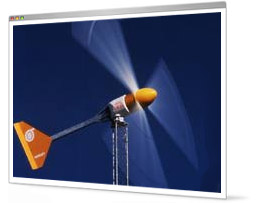
A mini-wind turbine could soon become the latest fashion accessory, especially when homeowners realise that generating electricity can make their meters run backwards! Indeed, a community in Spain is making millions this way. This numeracy activity appeals to students' entrepreneurial sides. They calculate how much they could make from wind power and decide whether wind turbines are a good investment.
Published: 11th May 2005
Reviews & Comments: 8
Learning objectives
Students will calculate the income that a wind turbine could generate.
Try the activity
- Activity sheet
Downloaded: 8368 times - Teachers notes
Downloaded: 3053 times
You will need Acrobat Reader installed to open the activity sheets.
Curriculum link
The advantages and disadvantages of renewable energy.Energy transfer and cost calculations.
11 – 14(KS3)
Energy and electricity QCA 9I
• Renewable energy sources can be used to drive electrical generators.
• Power ratings
GCSE specifications
AQA Core Science
Unit P1a Energy and Electricity: 13.3 Why are electrical devices so useful?
• Calculate the amount of energy transferred from the mains using:
energy transferred = power � time
(kilowatt-hour, kWh) (kilowatt, kW) (hour, h)
• Calculate the cost of energy transferred from the mains using:
total cost = number of kilowatt-hours x cost per kilowatt-hour
Edexcel Core Science
Unit P1a Topic 10: You're in Charge
• Use the equation to calculate the cost of electricity: cost = power � time � cost of 1kWh where power is measured in kilowatts and time is measured in hours
Gateway Core Science
Module P2 Living for the future: Item P2c Fuels for Power
• State that the unit of electrical energy supplied is the kilowatt hour.
• Calculate the number of kilowatt hours given the power in kilowatts and time in hours.
• Calculate the cost of energy supplied.
Twenty First Century Additional Science
Module P5: Electrical circuits: P5.5 How much electrical energy do we use at home?
• Use the following equation to calculate energy transfer in joules and kilowatt-hours:
energy transferred = power x time
(kilowatt hour, kWh) (kilowatt, kW) (hour, h)
• use the equation: power = potential difference (voltage) � current
(watt, W) (volt, V) (ampere, A)
• calculate the cost of electrical energy given the power, the time and the cost per kilowatt hour.
Running the activity
Page 1 makes students aware of the market for wind power and sets the task. Page 2 is an advert for wind turbines and includes a brief description of their benefits and how they operate. Individuals or small groups will need copies of page 3 to structure their calculations. There are two versions of page 3 – one for KS3 students and the other for KS4. The answers to the calculations are included on the downloadable version of the Teachers' Notes.
In the KS4 version, students take the power output of two different turbines from a wind-speed graph. They use these to calculate how many kWh of electricity each turbine can generate in a year. This involves multiplying their readings from the graph by 24 x 365 (number of hours in a year) and by 0.8 (assuming the wind turbine is generating electricity 80% of the time).
The calculations greatly simplify the economics of wind generation. A turbine's power output can show drastic variations for the same average wind speed. The calculations also assume that wind will provide all the electricity a family needs, at all times. This is unlikely to be the case. They would need to pay for backup supplies when the wind can't meet their demand for energy.
Web links
News links
- www.gcse.com
- Bitesized notes on power, energy transfer and renewable energy sources.
- Guardian
- This story reports from a conference in which home wind turbines were presented as 'homeowners' latest fashion accessory' and explains why owning mini-wind turbines can make meters turn backwards.
- DTI
- Advice on installing wind turbines.
- British Wind Energy Association
- http://www.bwea.com/noabl/index.html
- XCWeather
- UK wind map – showing current wind speeds across the country.
- Yes2wind
- A downloadable video that makes a case for renewable forms of energy.
Reviews & Comments
Write your online review to share your feedback and classroom tips with other teachers. How well does it work, how engaging is it, how did you use it, and how could it be improved?
science
Dec 11th, 2013

Great activity- a good way to relate particles to everyday life, making science relevant and interesting.
Reviewer: Hamza Butt
Physics
Jul 18th, 2012
Very helpful
Reviewer: Charles Morrison
p5
Dec 6th, 2007
a fantastic way to show everyday applications of energy calculations. Thanks you. My class has enjoyed debating this topic.
Reviewer: Mrs Thuy T Tran
Riches from the wind
Apr 29th, 2007

I used this with a Year 10 class, here in New Zealand. They worked through the KS3 sheet. It developed a lot of discussion here as we have wind farms and there is the debate as to whether New Zealand should remain nuclear free. Got the class thinking about the future. Fiona Craven HOD Science Motueka High School, Motueka, New Zealand
Reviewer: Fiona Craven
Riches form the wind - January 2006
Aug 3rd, 2006
This was a fantastic exercise - which I adapted for my year 7 class. The first part of the lesson was spent watching the first 5 minutes of Godzilla and discussing the Chernobyl power station as an example of what could go wrong with nuclear reactors. I then showed them a model of a wind mill, and we discussed benefits and drawbacks of the model from what they could see. The students individually completed a worksheet on the advantages and disadvantages of wind and nuclear energy writing a short summary of the type of energy they would vote for. In larger groups, they put their information together. The class then was split into two, one half for wind and the other for nuclear. The debate lasted a good 20 minutes and a lot of good science came out of it.
Reviewer: ravinder rheel
Riches from the wind June 13th 2006
Jun 13th, 2006
Used this with a year 10 class and so I gave them the KS4 version. I projected the sheets onto a whiteboard and provided them with the table sheet which helped since I had to explain the way to work out the table and the profit to be made. From then on it worked well and held their interest. The more able members of the group finished the exercise in about twenty minutes although some did not finish at all mainly because they were not able to tie in the variables of generator cost and windspeed. A worthwhile exercise all in all.
Reviewer: Paul Johnston
Riches from the Wind
Oct 3rd, 2005
Tried this with my Yr 10s using the KS4 sheet. After the calculations had been completed, had a good discussion about what other information we needed e.g. how many days a year was it blowing at 5 m/s, at 6 m/s etc. Some were happy to pull power out of the Grid but had difficulty with putting power into the Grid.
Reviewer: John Pindar
Riches from the wind
May 17th, 2005
An excellent looking sheet. Well structured for (simplified calculations). I have done similar with Cheshire Able Pupils' Course (KS3) for the past few years and will certainly incorporate some of these ideas into the course in future. Chris Hayton, i/c Physics and KS3, St Gregory's Catholic HS, Warrington.
Reviewer: Chris Hayton

200 lessons and assessments from as little as £4.95
Related Activities
Physics / Generating electricity
Difficult & Dull / Electricity & Magnetism
How Science Works / Interpreting data
- Choosing trainers
- Pluto: a planet no more
- Hard Stuff
- Australian light bulb ban
- Fast car
- Earth 2
- Godzilla is real!
- Rats
AQA / P1a energy & electricity
Gateway / P2 Future living
21st Century / P5 Electric circuits
QCA / 9I Energy & electricity
- Bulb danger
- Charge!
- So windy
- Australian light bulb ban
- Poo power or nuclear power?
- Play Pump
- Think big
- Appliance science
Ideas about Science / Data collection & analysis
- Time raiders - death of a mummy
- Choosing trainers
- Inside Easter Eggs
- When will women overtake men?
- False diamonds
- Bushtucker challenge
- Healthy Eating
- High Speed Risk
- Should we be worried about salt?
- Turkey
- Santa 2025
- Think 30 for a reason
- Winter Olympics
Learning Strategy / Data work
- Bionic body
- Bushtucker challenge
- Santa 2025
- Winter Olympics
- Killer Flu
- Should we be worried about salt?
- Tsunami Warning
- When will women overtake men?
- MMR
- Inside Easter Eggs
- Einstein's time
- Shampoo claims - truth or lies?
- High Speed Risk
- Acid rain: Britain recovers?
- Think 30 for a reason
- Rats
- Global warming-do 'the facts' stand up?
- Pluto: a planet no more
- Turkey
- Australian light bulb ban
- So windy
- Earth 2
- Fast car
- Choosing trainers
- Death of an angel
- Ban UV beds
- Antibiotic cockroaches